

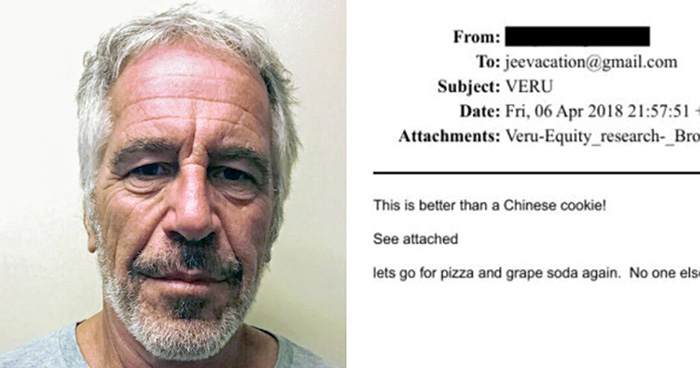
Online conspiracy communities are combing through a newly released trove of Jeffrey Epstein-related documents and claiming that repeated references to “pizza” and “cheese” are coded language—sparking a fresh revival of the long-debunked “Pizzagate” narrative across social platforms.
The renewed chatter follows the U.S. Department of Justice’s January 30 publication of 3.5 million pages of documents released in compliance with the Epstein Files Transparency Act.
- Newly released Epstein documents include nearly 2,000 mentions of “pizza” and “cheese,” fueling a revival of the debunked Pizzagate conspiracy online.
- Some viral “pizza” references linked to the Epstein files actually originate from other sources.
- Epstein document release exposed nearly 100 victims’ identities due to redaction errors, prompting legal actions to protect their privacy.
- The 3.5 million documents are searchable but risk misinterpretation as isolated keywords lack vital context about authorship and intent.
- Authorities and news outlets confirm no evidence supports Pizzagate claims despite the spread of misleading screenshots and false narratives.
The massive dump of emails, reports, and other records related to Epstein is freely available to be keyword-searched, and amateur sleuths have pounced on the fact that the words “pizza” and “cheese” appear almost 2,000 times in total.
The DOJ recently released 3.5 million documents tied to disgraced financier Jeffrey Epstein
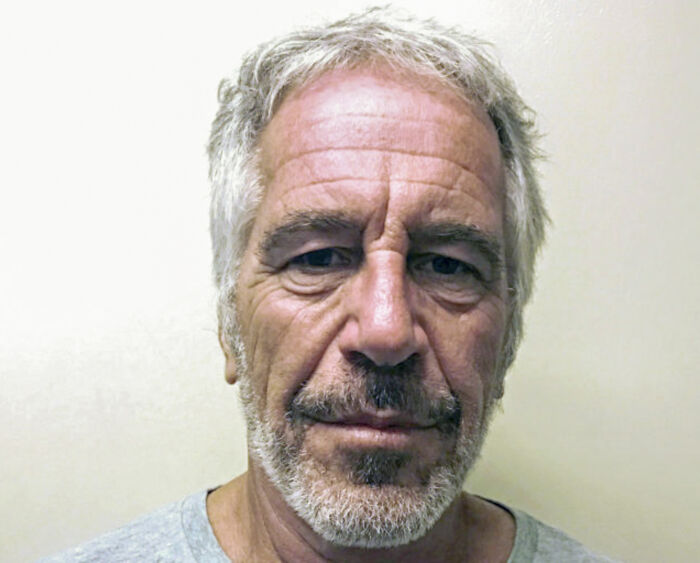
Image credits: Kypros/Getty Images
Several viral posts have circulated screenshots of short, mundane-sounding lines—such as messages about a “headcount for pizza” or asking who wants “pizza” in Austin—and presented them as alleged proof that “pizza” is a proxy term for child sexual abuse material.
Other users have questioned what “grape soda” may mean, after it appeared in an awkward sounding email that read as if it could be in code.
“Lets go for pizza and grape soda again. No one else can understand.“ Read the email from a redacted sender.
In another confusing exchange, someone wrote, “butt cake sounds great but I need pizza.”
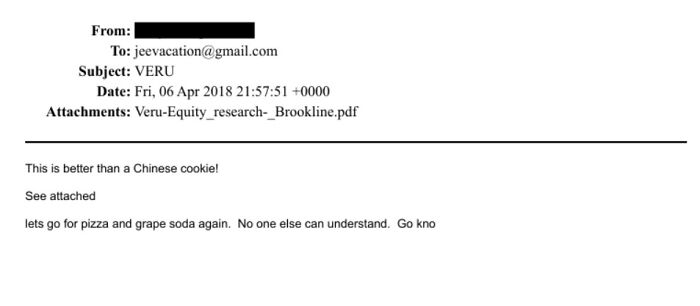
Image credits: Department of Justice
At least one of the most-shared “pizza” snippets being used to bolster claims about child sexual abuse material does not originate in the Epstein files at all.
The phrase “headcount for pizza” appears in a 2007 email thread from Stratfor, a private intelligence firm, published years ago as part of WikiLeaks’ Global Intelligence Files—a separate archive frequently recycled in “Pizzagate” lore.
In that thread, the context is office logistics, not Epstein, and the message headers identify Stratfor addresses and dates.
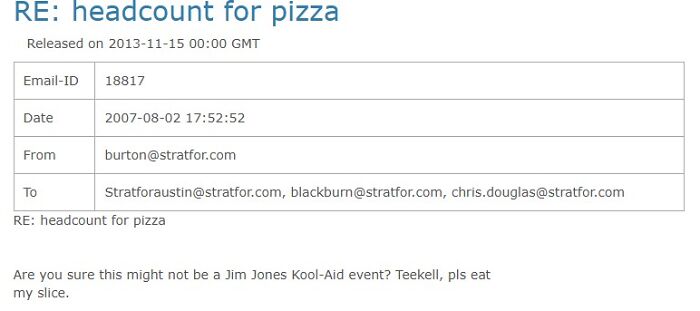
Image credits: WikiLeaks
Even within the actual Epstein document release, many “pizza” references read as ordinary food talk, with “pizza” appearing 859 times and “cheese” 1,138 times.
According to the “Pizzagate” conspiracy, “cheese” and “pizza” are used as code for child sexual abuse and related materials.
The conspiracy emerged during the 2016 U.S. election cycle, when leaked emails involving Hillary Clinton campaign chair John Podesta were misread as coded references to a child trafficking ring supposedly linked to a Washington pizza restaurant.
🚨 Before it gets deleted: The full Jeffrey Epstein Interview by Steve Bannon.
A lot of information surrounding the Epstein files has been taken down and redacted. Make sure to bookmark and repost this so more people can see it before it’s also taken down.
unedited (by me) 1hr… pic.twitter.com/WbbNMIyF9T
— Alex James (@actualAlexJames) February 1, 2026
Police and major news organizations found no evidence to support the claims, but the rumor fueled harassment and culminated in an armed 2016 incident at Comet Ping Pong, after a man traveled to the restaurant believing he was “rescuing” children.
This time, the catalyst is a searchable government archive—one that has already produced its own serious controversy unrelated to codewords.
In court papers and reporting this week, attorneys for Epstein’s victims said the DOJ release included thousands of redaction errors that exposed the identities of nearly 100 women, including names and other identifying details.
Some references to ‘pizza’ within the Epstein files appear unnatural or otherwise strange
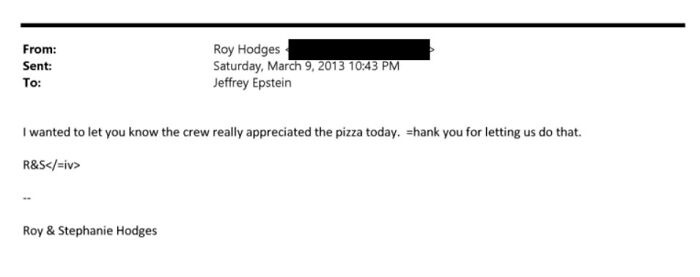
Image credits: Department of Justice
The Associated Press reported that a federal judge canceled a hearing after the DOJ and victims’ lawyers reached an agreement to better protect identities and remove or correct sensitive materials.
The Pizzagate revival is indicative of how large-scale document dumps can create ideal conditions for viral misinterpretation: keyword hits are easy to screenshot and share, while the surrounding metadata—who wrote what, when, to whom, and why—is harder to communicate in a post.
Spread of the conspiracy is made easier by the fact that some references to “pizza” appear out of context or are otherwise questionable.
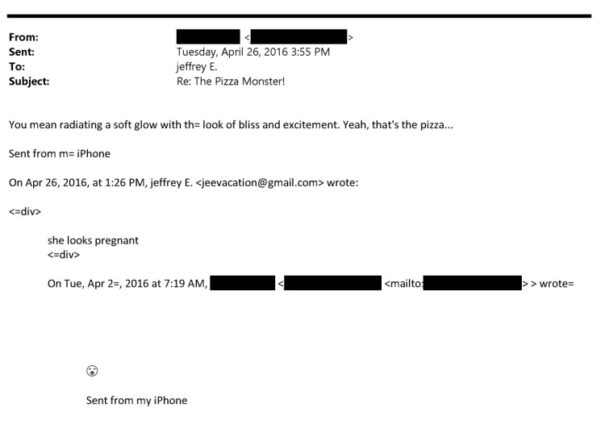
Image credits: Department of Justice
Some coverage now circulating online also blurs the line between different “pizza” artifacts: excerpts that appear to come from the DOJ’s Epstein release are being posted alongside older WikiLeaks screenshots, and the combined collage is then described simply as “from the Epstein files,” even when document headers point elsewhere.
The DOJ release itself cautions against drawing sweeping conclusions from mentions alone. Being named in the files is not proof of wrongdoing and the trove contains a mixture of records and allegations that require context to interpret.
Poll Question
Thanks! Check out the results:
Subscribe to Access
Exclusive Polls

By entering your email and clicking Subscribe, you're agreeing to let us send you customized marketing messages about us and our advertising partners. You are also agreeing to our Privacy Policy.
Thank you! You've successfully subscribed to newsletters!



It's not just pizza though, it's an array of food references. Jerky being the other most often used term, in which the convicted trafficking p**o keeps talking about putting the jerky into the freezer....the whole purpose of jerky is that it doesn't need to be refrigerated. Is it coded language regarding illicit substances? Is it coded language regarding cannibalism? We don't know.....but it IS coded language. If you're able to get away with trafficking thousands of victims to a private island, if those victims are than being graped and tortured, seemingly by many of the richest most powerful people in the world, it's a little naive to pretend there's some kind of moral line in the sand. If any of it is true, there is a non-zero chance that ALL OF IT IS TRUE....that people don't want it to be true, doesn't mean it should be dismissed.
It's not just pizza though, it's an array of food references. Jerky being the other most often used term, in which the convicted trafficking p**o keeps talking about putting the jerky into the freezer....the whole purpose of jerky is that it doesn't need to be refrigerated. Is it coded language regarding illicit substances? Is it coded language regarding cannibalism? We don't know.....but it IS coded language. If you're able to get away with trafficking thousands of victims to a private island, if those victims are than being graped and tortured, seemingly by many of the richest most powerful people in the world, it's a little naive to pretend there's some kind of moral line in the sand. If any of it is true, there is a non-zero chance that ALL OF IT IS TRUE....that people don't want it to be true, doesn't mean it should be dismissed.

18
2