


Dozens of reporters turned in their press badges and left the Pentagon on Wednesday in the face of new rules that restrict how journalists report on the U.S. military.
The rules, issued by Secretary of War Pete Hegseth, require journalists to sign a pledge promising not to report information that has not been officially authorized for release. In doing so, they risk expulsion.
Highlights
- Dozens of Pentagon reporters rejected new rules limiting their reporting, turning in badges and leaving the building at the 4 p.m. deadline.
- New rules require journalists to sign a pledge not to report unauthorized information, risking expulsion from the Pentagon if broken.
- Pentagon Secretary Pete Hegseth called the rules common sense, blaming the press for being disruptive and dishonest.
- Media organizations including AP and The New York Times opposed the rules, with only One America News Network agreeing to them.
The Pentagon described the regulations as “common sense” measures aimed at regulating a “very disruptive” press.
Dozens of reporters turned in their press badges and left the Pentagon
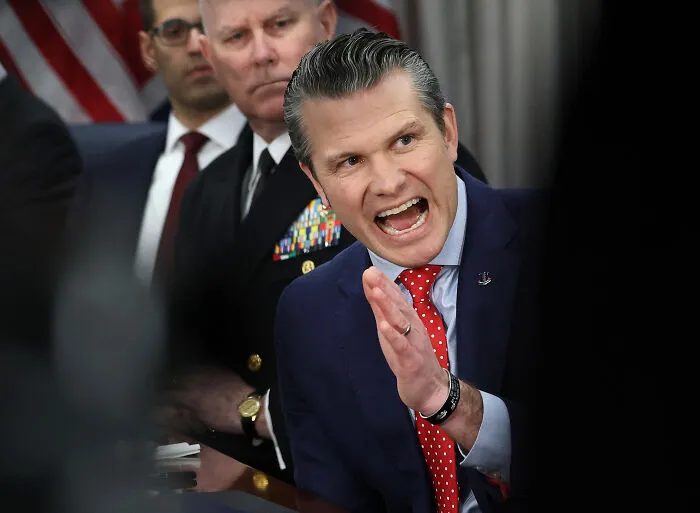
Image credits: Win McNamee/Getty Images
News organizations, however, overwhelmingly rejected the rules. Only the conservative One America News Network signed the pledge.
Reporters from The Washington Post, The Atlantic, Fox News, and dozens of other outlets refused to comply and left at 4 p.m., the deadline set by the U.S. Department of War, formerly the Defense Department, to leave the building.
As the 4 p.m. deadline approached on Wednesday, reporters began clearing their workspaces. The Pentagon corridor was lined with boxes of documents, as reporters left the space with chairs, a copying machine, books, and old photos.
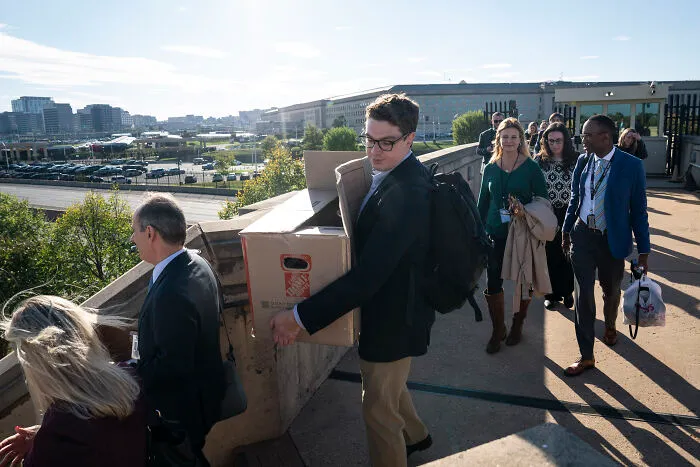
Image credits: Jabin Botsford/Getty Images
About 40 to 50 journalists left the building together after handing in their badges. Television crews dismantled broadcast booths with technical gear to the parking lot.
“This is a sad day for those who support a free press,” said Nancy Youssef, a Pentagon correspondent for The Atlantic. “But I’m incredibly honored to be part of a press corps that stuck together and was committed to protecting our First Amendment rights.”
Hegseth asked reporters not to report on information not officially released
U.S. President Donald Trump publicly supported the new regulations at a White House briefing on Tuesday.
“I think he [Hegseth] finds the press to be very disruptive in terms of world peace,” Trump said. “The press is very dishonest.”
Hegseth, a former Fox News host, previously restricted reporters’ access to parts of the Pentagon. During his term, he has held only two formal press briefings, banned reporter access from parts of the Pentagon without an escort, and investigated media leaks.
He said the new rules are “common sense” and that journalists are required to sign a document acknowledging the rules, not necessarily agree to them.
But for experts, there is no distinction. “What they’re really doing, they want to spoon-feed information to the journalist, and that would be their story. That’s not journalism,” Jack Keane, a retired U.S. Army general and Fox News analyst, told Fox News.
For journalists, the new rule is a restriction on press freedom
The Pentagon Press Association, representing 101 journalists from 56 news outlets, also opposed the policy. Media organizations, including AP and The New York Times, asked their correspondents to leave instead of signing the new rules.
Despite leaving the building, journalists said they plan to continue covering the military.
They will rely on sources and reporting from outside the Pentagon, although some acknowledged that fear of retaliation from leadership may reduce the willingness of military personnel to speak on the record.
Tom Bowman, an NPR Pentagon correspondent, wrote, “They knew the American public deserved to know what’s going on. With no reporters able to ask questions, it seems the Pentagon leadership will continue to rely on slick social media posts, carefully orchestrated short videos and interviews with partisan commentators and podcasters. No one should think that’s good enough.”
Youssef also said that as a journalist, it made no sense to sign on to these rules.
More than 40 journalists left the building with boxes of documents
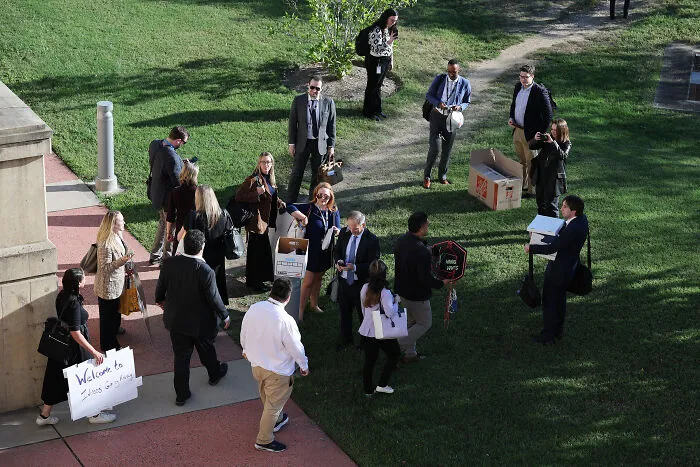
Image credits: Win McNamee/Getty Images
“To agree to not solicit information is to agree to not be a journalist,” she said. “Our whole goal is soliciting information.”
While it's unclear what impact the new rules will have, it's not new for the Trump administration to try to silence journalists. Trump himself has been involved in several class actions against The New York Times, CBS News, ABC News, The Wall Street Journal, and the Associated Press in the past year.
On the same evening, Hegseth’s plane had to make an unscheduled landing in the United Kingdom due to a cracked windshield while returning from NATO meetings.
Hegseth said it was “All good” in a social media post after the incident.