
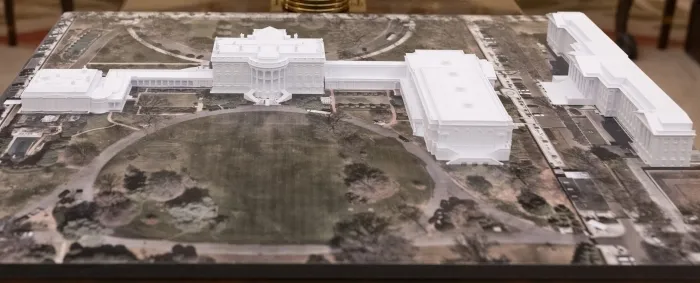
Senate Republicans formally stripped up to $1 billion for security upgrades tied to President Donald Trump's proposed White House ballroom from a revised budget reconciliation bill on Wednesday. The updated text was released by the Senate Judiciary Committee.
Trump had pressed senators for weeks to preserve the ballroom funding, but the provision disappeared from the sprawling immigration enforcement package after internal GOP resistance and a ruling by the Senate parliamentarian.
Highlights
- Senate Republicans stripped up to $1 billion for White House ballroom-related security from a revised budget package.
- The removal followed a Senate parliamentarian ruling and public opposition from several GOP senators.
- Trump had previously said the ballroom would be funded by him and private donors, not taxpayers.
- The setback came one day after Republicans forced Trump to drop a separate $1.8 billion fund.
The reversal handed the White House another defeat one day after Senate Republicans also forced Trump to drop a separate $1.8 billion fund for allies who claimed the government had unfairly targeted them.
The billion-dollar provision that couldn't survive its own party

Image credits: Daniel Torok / Wikimedia Commons
The ballroom money had appeared as part of a broader package to fund immigration enforcement agencies, including ICE and CBP. GOP leaders had hoped to move the bill through budget reconciliation, a process that can bypass the Senate's 60-vote threshold if the provisions follow strict budget rules.
That plan hit a wall in mid-May, when Senate parliamentarian Elizabeth MacDonough ruled that an earlier version containing the ballroom security funding did not comply with the Byrd Rule, which blocks provisions deemed unrelated to federal spending. Senate Majority Leader John Thune initially vowed to push on, telling reporters, "We'll be trying a new approach" — noting that during last year's tax-and-spending bill debate, it took five tries to win the parliamentarian's approval.
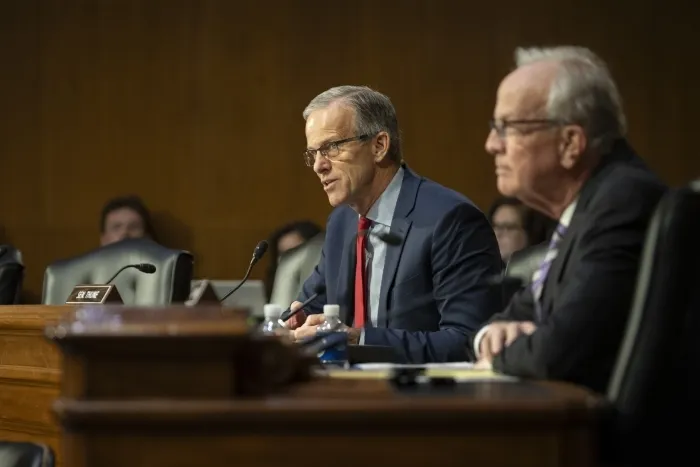
Image credits: USDAgov / Flickr
The standoff then escalated sharply. Trump called Thune directly to demand MacDonough be fired, and later published a lengthy social media post calling her out by name. Thune called Trump's statement "concerning" and said he would provide MacDonough with additional security in the wake of the president's condemnation — a rare public rebuke of the White House by the Senate's top Republican.
The White House pushed back on the idea that Republicans had deliberately abandoned the money. A White House spokesperson said: "The parliamentarian's decision was reported weeks ago. This framing is false as it implies that Republicans removed it deliberately rather than under parliamentary pressure."

Image credits: US Senate / Wikimedia Commons
The fight marked a sharp turn from the administration's earlier public position. In late July last year, the White House's Rapid Response 47 account said the ballroom would be "fully funded by President Trump and other private donors — not taxpayers."
After a shooting incident at the Washington Hilton during the White House Correspondents' Association dinner on April 25, supporters of the funding renewed the push for public money tied to security. On May 19, Trump invited reporters to tour the construction site and highlighted what he described as the project's security benefits.
A ballroom, a slush fund, and a taxpayer bill nobody wanted to sign
The proposal drew attacks from Democrats and raised concerns among several Republicans. Four GOP senators publicly opposed using public money for the project: Bill Cassidy of Louisiana, Susan Collins of Maine, Lisa Murkowski of Alaska, and Thom Tillis of North Carolina.
Cassidy put the concern bluntly in comments reported by PBS NewsHour: "People can't afford groceries and gasoline and health care, and we're going to do a billion dollars for a ballroom?"

Democrats hammered the provision as a taxpayer giveaway. Senate Minority Leader Chuck Schumer said, according to CNBC, "Republicans are actively helping Trump steal from the American people to fund his ballroom and his multi-billion dollar MAGA slush fund."
Senate Democratic leadership also used the issue to tie the ballroom to household costs, saying in a statement that "These Ballroom Republicans are choosing Trump's chandelier over your childcare, Trump's ego over your electric bill, and Trump's palace over the people's priorities."
Behind the scenes, Thune was already steering toward an exit. He told reporters that his preference was for the White House to shut down the proposed $1.8 billion anti-weaponization fund, and predicted that a reconciliation bill without the ballroom funding and without that fund "would have a good chance of reaching the president's desk." When asked about ongoing resistance from senators like Thom Tillis, Thune told reporters simply, "We'll cross that bridge when we get there."
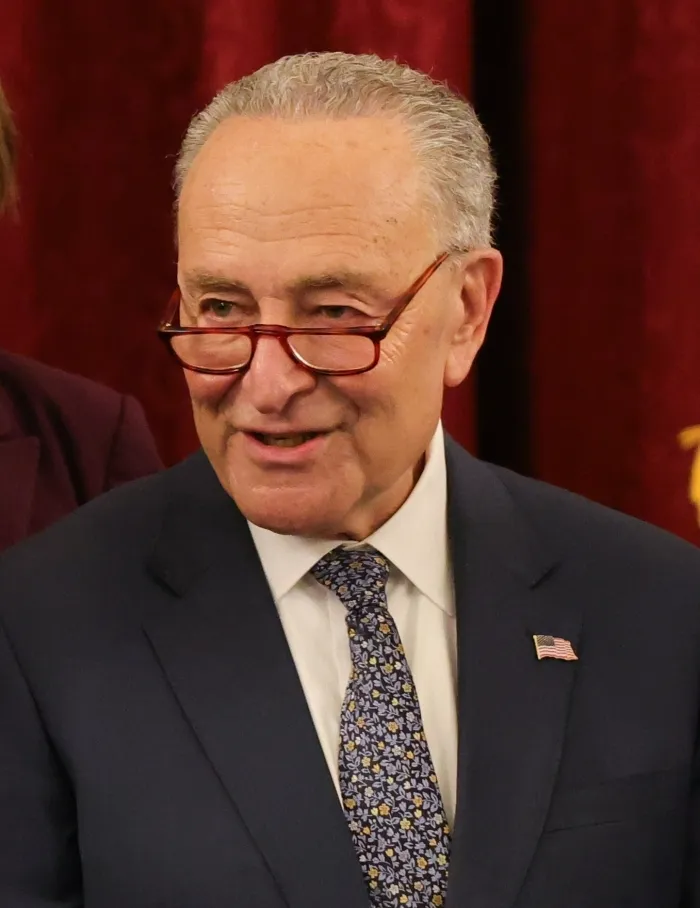
Image credits: Number 10 / Wikimedia Commons
The ballroom fight also overlapped with the collapse of the separate $1.8 billion "anti-weaponization" fund, which would have paid allies who said the government unfairly targeted them. After that fund was scrapped, Schumer told Time, "Democrats are going to make sure this slush fund is dead and cannot be revived, just like we did with the ballroom."
The updated Senate text made the ballroom funding's removal official. For Trump, it ended a weeks-long push that ran into parliamentary limits, Democratic attacks, and rare public resistance from members of his own party — including, crucially, from the man responsible for keeping them united: John Thune.