

Trump’s Alleged War Crimes In The Caribbean Slammed By Experts: “There Is No Coherent Argument”
The U.S. seizure of the oil supertanker Skipper on December 10 marked a fresh escalation in Washington’s pressure campaign against the authoritarian regime of Venezuelan President Nicolás Maduro, following months of military build-up and deadly bombings of alleged drug vessels in the Caribbean.
The warrant to seize the tanker was unsealed on Friday, revealing that a judge had signed it on Nov. 26 on the basis that Skipper formed part of an illicit oil shipping network supporting Hezbollah and Iran’s Islamic Revolutionary Guard Corps—both designated terrorist organizations by the United States.
- The U.S. seized the oil tanker Skipper, alleging ties to Hezbollah and Iran’s Islamic Revolutionary Guard Corps, escalating pressure on Venezuela’s Maduro.
- At least 95 people died in 25 U.S. strikes on suspected drug vessels since September, with lawmakers doubting legal or security justifications.
- Experts say the strikes violate international law as there is no armed conflict, making lethal force unjustified and victims civilians under human rights law.
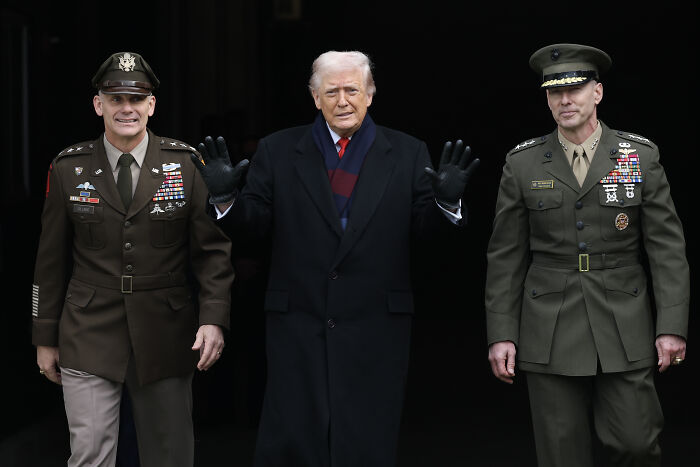
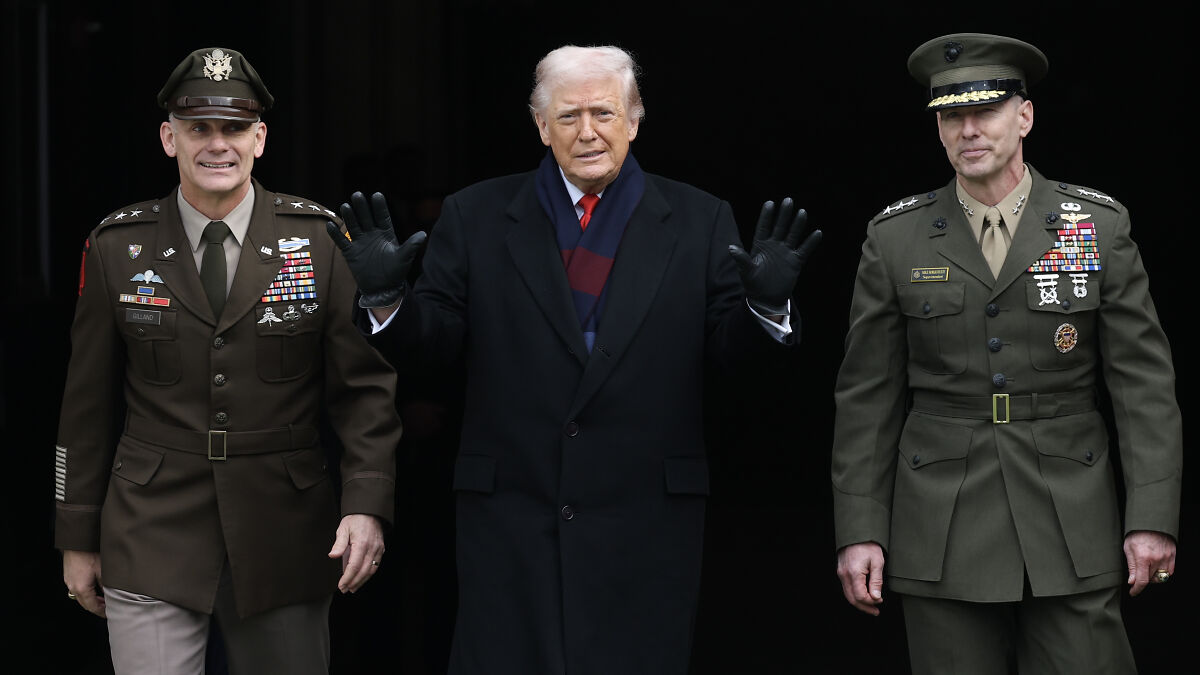
Donald Trump is facing scrutiny over the boat strikes. Image credits: Tasos Katopodis/Getty Images
The legality surrounding the bombing of small vessels remains much less clear. U.S. lawmakers have demanded a copy of the written opinion of military lawyers justifying the strikes, as well as any formal authorization from Defense Secretary Pete Hegseth. So far, the White House has only allowed the opinion to be read by a few lawmakers in a secure setting.
Meanwhile, following a closed-door briefing of all U.S. lawmakers by Secretary of State Marco Rubio and Defense Secretary Pete Hegseth, Democratic Senator Chris Murphy stated that “the Administration has no legal justification for these strikes and had no national security justification.”
At least 95 people have been killed in at least 25 strikes in the Caribbean and eastern Pacific since the first reported attack on September 2—an infamous “double-tap” operation that saw two survivors clinging to wreckage, who were then killed with a second missile.
We have only just begun to kill narco-terrorists.
— Pete Hegseth (@PeteHegseth) November 28, 2025
According to a White House memo to Congress obtained by The Associated Press in October, “the President determined that the United States is in a non-international armed conflict with these designated terrorist organizations,” and Trump had directed the Pentagon to “conduct operations against them pursuant to the law of armed conflict.”
U.S. officials have claimed the boat strikes are entirely aimed at stemming the flow of drugs into the country; however, in a candid interview published by Vanity Fair on Tuesday, White House Chief of Staff Susie Wiles offered the clearest indication yet that the Trump Administration is seeking regime change.
“He wants to keep on blowing boats up until Maduro cries uncle,” Wiles was reported as saying.
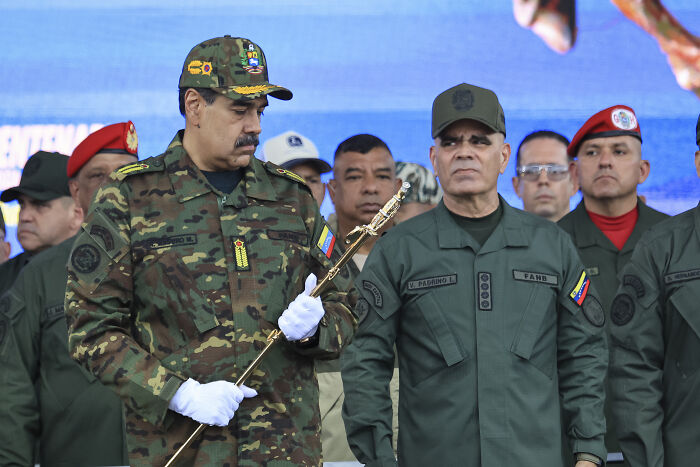
Venezuelan President Nicolás Maduro. Image credits: Jesus Vargas/Getty Images
The applicable legal framework matters. If the strikes are governed by the law of armed conflict, they fall under international humanitarian law (IHL), and the justification of lethal force involves the distinction, proportionality, and precautions in an attack. But the criteria change significantly under other frameworks.
War crimes require an armed conflict
“There is no coherent argument that the strikes are governed by IHL because there is no armed conflict to which both the U.S. and whomever is in the boats are parties,” said Kevin Jon Heller, professor of international law and security at the University of Copenhagen’s Centre for Military Studies.
“The U.S. has made no showing that those individuals are part of an organized armed group, much less one that is engaged in hostilities with the U.S. that are sufficiently intense to satisfy the legal definition of non-international armed conflict,” he said.
BE WARNED — IF YOU ARE TRANSPORTING DRUGS THAT CAN KILL AMERICANS, WE ARE HUNTING YOU! The illicit activities by these cartels have wrought DEVASTATING CONSEQUENCES ON AMERICAN COMMUNITIES FOR DECADES, killing millions of American Citizens. NO LONGER. pic.twitter.com/XHTDpWp6h7
— The White House (@WhiteHouse) September 15, 2025
Even if the administration insists it is “at war” with cartels, Heller argued the label does not create an armed conflict. “Because there is no armed conflict, all of the victims of the strikes are civilian,” he said.
A Just Security analysis draws a similar conclusion: in the absence of a declared armed conflict, law enforcement procedures should be followed and alleged drug vessel occupants should be treated as suspects, not enemy targets.
Human rights law: necessity and imminence
According to Lawrence Hill-Cawthorne, professor of public international law at the University of Bristol Law School, the alleged drug vessel strikes are governed by international human rights law (IHRL), under which the right to life prohibits lethal force unless “absolutely necessary” to protect life—meaning an imminent threat must be present and a less coercive alternative is not feasible.

Trump has brushed off criticism of the strikes. Image credits: Alex Wong/Getty Images
“There is no argument that can be made to suggest that this standard is met in these cases,” Hill-Cawthorne said. “That these strikes so obviously fall foul of international human rights law no doubt explains why the U.S. administration relies, wrongly, on the more permissive targeting rules under the law of armed conflict.”
On whether lethal force could be justified should people on the targeted vessels fire on U.S. military assets, Heller was unambiguous.
“I do not see how the mere act of firing small arms against drones, gunships, and fighter jets poses an ‘imminent threat to life,’” he said. “Most of the strikes seem to be carried out by unmanned drones, which by definition cannot be faced with such a threat.”
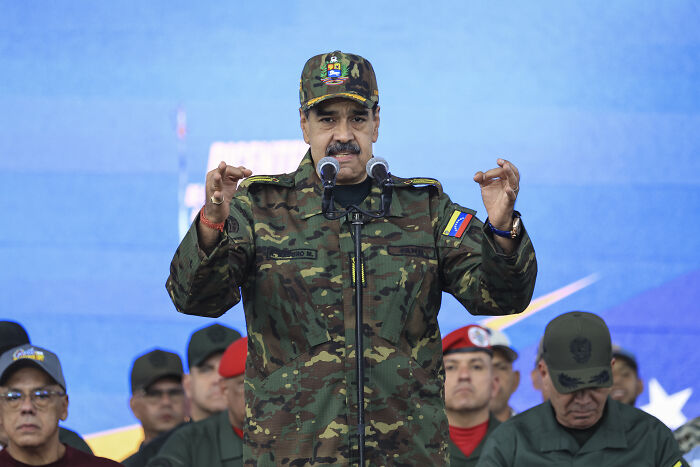
Maduro previously pleaded for the U.S. not to start a crazy war. Image credits: Jesus Vargas/Getty Images
According to Heller, the use of heavier weapons could conceivably pose an imminent threat to manned aircraft; however, “there is no evidence any such weapons have been used by the victims of the strikes.”
Meanwhile, the mere presence of weapons in the vessels could not justify lethal force “under any circumstances.”
If not war crimes, what are the strikes?
Human Rights Watch (HRW) has referred to the killings of those aboard the alleged drug vessels as “extrajudicial killings” since responding to the first strike in early September—a phrase that was also used by the UN High Commissioner for Human Rights Volker Türk in late October.
Hill-Cawthorne warned that other nations have an obligation under IHRL to avoid being complicit in violations of the right to life—something echoed by HRW in a report published on December 9, which called on U.S. partners to “publicly object to the strikes.”
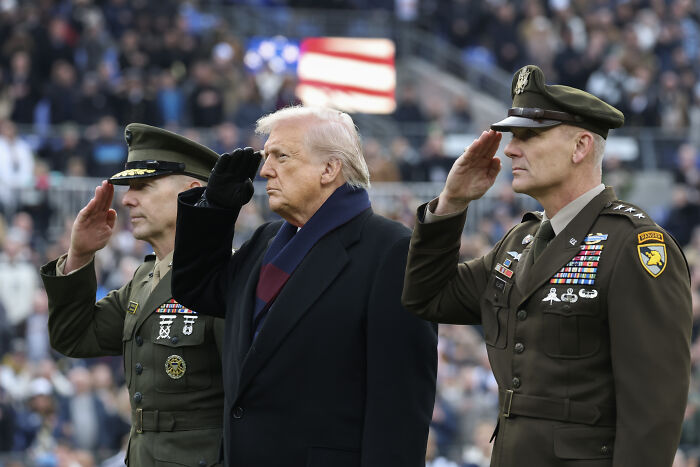
Trump has defended his War Secretary Hegseth. Image credits: Jasos Katopodis/Getty Images
“This likely explains why a number of States have allegedly curtailed their intelligence sharing with the U.S. in relation to drug traffickers,” said Hill-Cawthorne.
According to Heller, the killings amount to “murder under both U.S. law and almost certainly murder under the law of the various states that might have jurisdiction over them.” However, whether they could be considered “crimes against humanity” under IHRL law is less clear.
Crimes against humanity are one of four types of “international crimes”—alongside genocide, war crimes and aggression—which carry individual responsibility for those who carry them out, as well as those who order them.
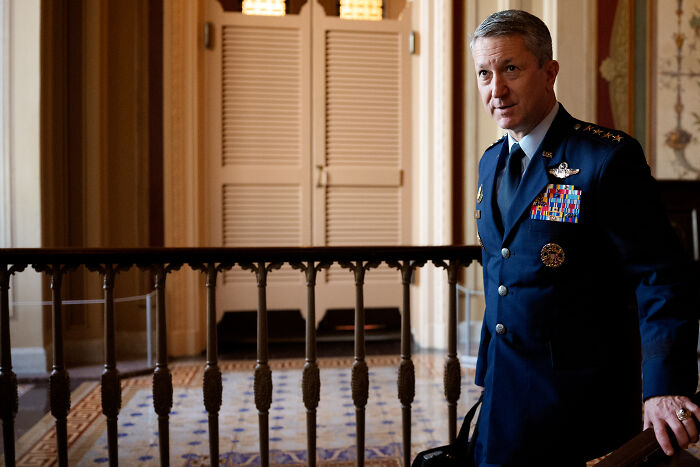
Chairman of the Joint Chiefs of Staff Air Force Gen. Dan Caine. Image credits: Andrew Harnik/Getty Images
The Rome Statute, which governs the International Criminal Court, stipulates that the crime against humanity of murder requires the perpetrator or perpetrators to have caused the death of one or more persons as part of a “widespread or systematic attack against a civilian population,” committed pursuant to a state or organizational policy.
While there is no set number of civilians who must be attacked for them to qualify as a civilian population, Heller said he found it highly unlikely. An international court would refuse to consider a group of more than 90 victims a civilian population.
“The attack is clearly systematic and committed pursuant to a state policy. Indeed, the U.S. has openly acknowledged as much,” said Heller. “There is thus a very strong argument that the individuals who carry out the attacks as well as their military and civilian superiors are responsible for the crime against humanity of murder.”
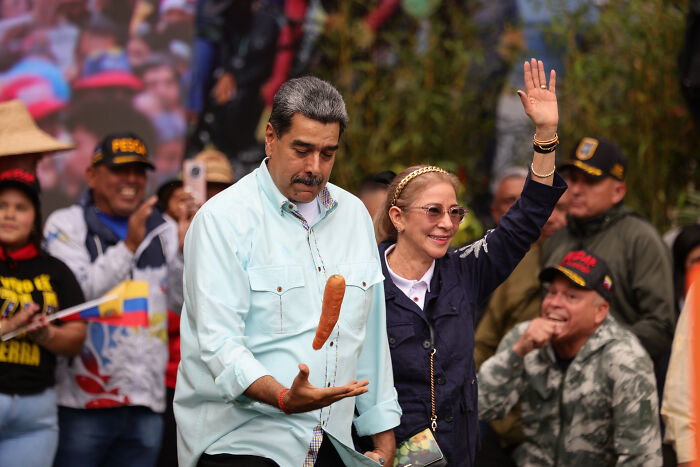
The U.S. has a bounty on Maudro. Image credits: Jesus Vargas/picture alliance via Getty Images
Hill-Cawthorne agreed that the scale of the attacks to date leaves ambiguity around whether they meet the criteria for crimes against humanity, but emphasized that they still violate the right to life, while the legal argument for them being widespread or systematic will strengthen as more are carried out.
“That could also lead to the individual criminal responsibility of military and civilian superiors, in addition to the direct perpetrators of attacks,” he said.
Poll Question
Thanks! Check out the results:
Subscribe to Access
Exclusive Polls

By entering your email and clicking Subscribe, you're agreeing to let us send you customized marketing messages about us and our advertising partners. You are also agreeing to our Privacy Policy.
Thank you! You've successfully subscribed to newsletters!
1k+views
Share on Facebook


Seems the average reader here, and the writer as well... may want to keep one key thing in mind. War Crimes trials are handled in the Hague. The US does not recognize the authority of this, as the US is not a member of the international court, and has plans in place in the event any US cit9izen or soldier is brought there for trial, through the Service-Members' Protection Act (ASPA), nicknamed the "Hague Invasion Act." This law authorizes the U.S. president to use "all necessary means," including military force, to liberate U.S. military personnel or allied citizens detained by the International Criminal Court (ICC). Furthermore, the president's act of declaring d**g smugglers terrorists, itself doesn't constitute a war crime. This bill was a bi-partisan bill, which passed with some 397 to 32 votes in the House, and 92 to 7 in the Senate.

This is what I love about Trump. He doesn't know talk endlessly about a problem. He takes action! Blow them all to hell!!
Seems the average reader here, and the writer as well... may want to keep one key thing in mind. War Crimes trials are handled in the Hague. The US does not recognize the authority of this, as the US is not a member of the international court, and has plans in place in the event any US cit9izen or soldier is brought there for trial, through the Service-Members' Protection Act (ASPA), nicknamed the "Hague Invasion Act." This law authorizes the U.S. president to use "all necessary means," including military force, to liberate U.S. military personnel or allied citizens detained by the International Criminal Court (ICC). Furthermore, the president's act of declaring d**g smugglers terrorists, itself doesn't constitute a war crime. This bill was a bi-partisan bill, which passed with some 397 to 32 votes in the House, and 92 to 7 in the Senate.
This is what I love about Trump. He doesn't know talk endlessly about a problem. He takes action! Blow them all to hell!!

15
2