

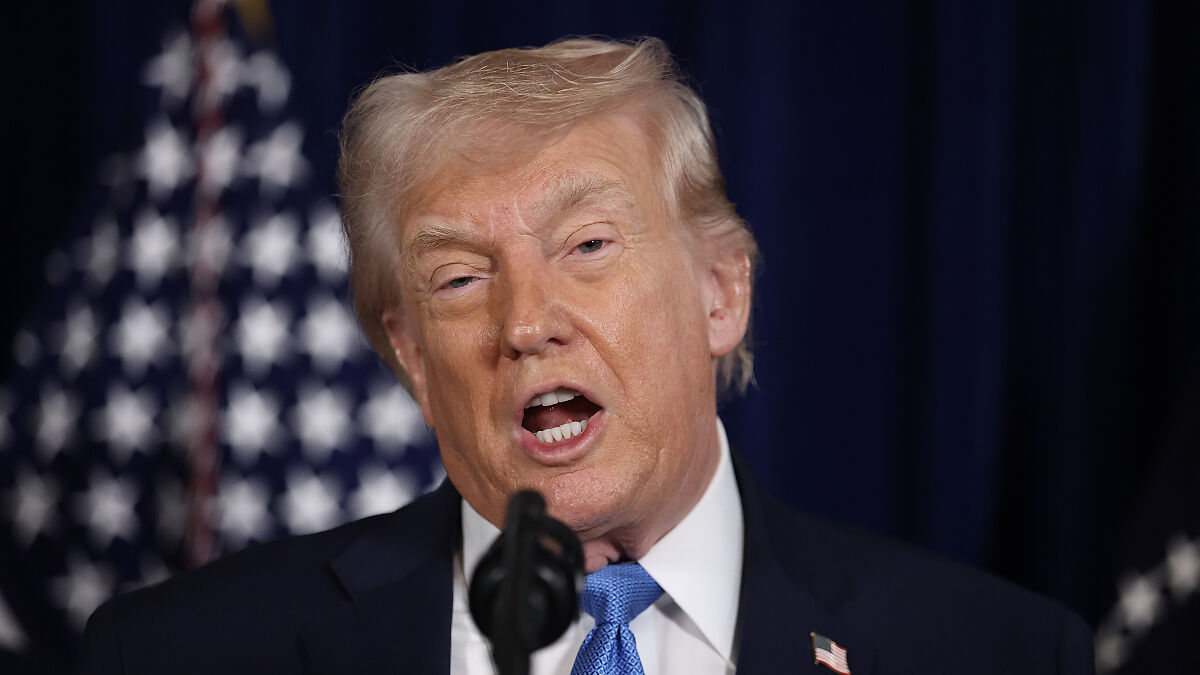
Donald Trump has claimed that civil rights legislation in the U.S. led to white people being treated “very badly.”
The president made the comments in a two-hour interview with The New York Times, published on Sunday.
“Well, I think that a lot of people were very badly treated,” Trump said, referring to American civil rights protections.
- Donald Trump claimed civil rights laws led to white people being treated 'very badly' and caused reverse discrimination.
- Trump argued some deserving people were blocked from jobs or college due to these policies, calling it unfair reverse discrimination.
- Civil rights activists including Al Sharpton sharply criticized Trump, saying his claims distort history and ignore ongoing inequalities.
Donald Trump claimed that white people have suffered
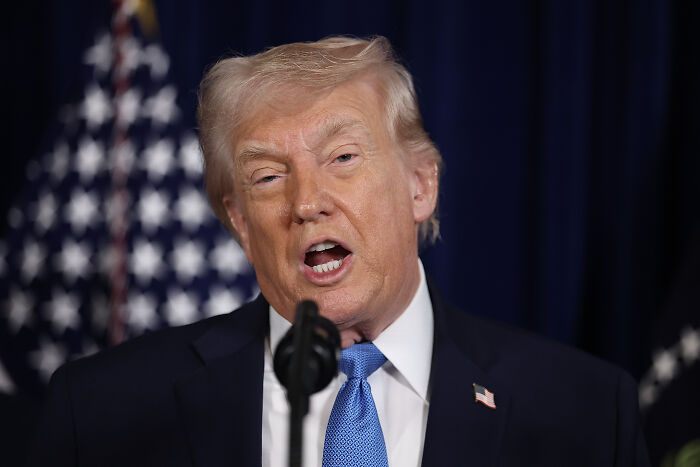
Image credits: Joe Raedle/Getty Images
“White people were very badly treated, where they did extremely well and they were not invited to go into a university or a college.”
Trump went on to argue that measures designed to address racial discrimination had, in some cases, unfairly disadvantaged others, leading to “reverse discrimination.”
“I think it was unfair in certain cases,” Trump said.” At the same time, it accomplished some very wonderful things.”
He added, “But it also hurt a lot of people—people that deserve to go to a college or deserve to get a job were unable to get a job.
“It was a reverse discrimination.”
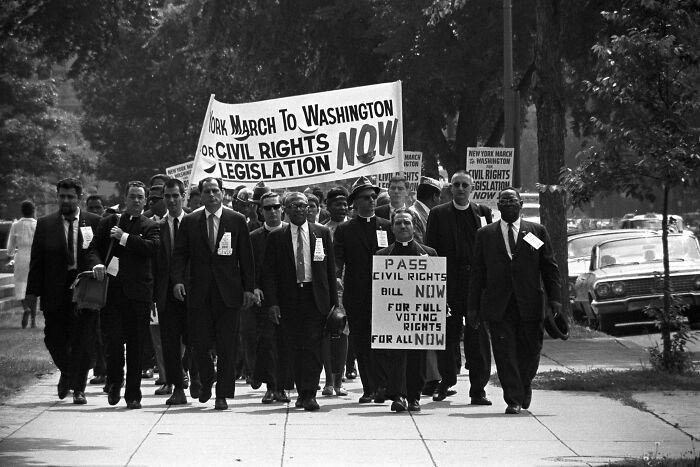
Image credits: Bob Parent/Getty Images
Civil rights laws in the U.S., such as the Civil Rights Act of 1964, were enacted at the height of the civil rights movement to outlaw discrimination on the basis of race, colour, religion, sex, or national origin.
These laws were built on decades of activism against segregation and unequal treatment, and established the legal framework for later anti-discrimination protections.
Trump’s comments on those protections being used to discriminate against predominantly white men have drawn sharp criticism from civil rights activists.
Reverend Al Sharpton, who founded and is president of the civil rights organization National Action Network (NAN), said Trump’s comments mischaracterize both history and ongoing inequalities.
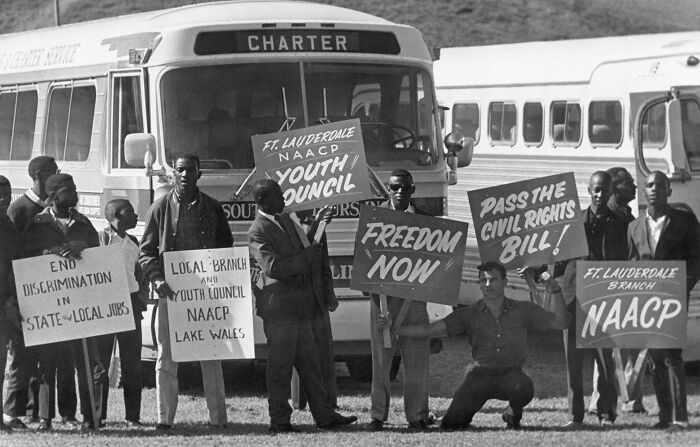
Image credits: Getty Images
In a statement on Tuesday, Sharpton said that the president’s remarks amounted to a “test balloon for erasing Black history,” and dismissed his claim as “twisted” and “alarming.”
He noted that “many fought, bled, and in many cases died” for civil rights protections, adding that the “facts simply don’t match up to the reality Donald Trump has chosen to live in.”
“Even more than 60 years after the Civil Rights Act or the Voting Rights Act, many black Americans continue to lack access to equitable education, capital dollars, or even their right to exercise democracy,” Sharpton said.
“Under Donald Trump’s watch that has only gotten worse as we’ve seen diversity, equity, and inclusion eradicated from the federal government. The Supreme Court has already gutted affirmative action and stands on the verge of wiping out the last pillar of the Voting Rights Act.”
Trump’s comments have been sharply criticized by civil rights activists
REV. AL SHARPTON SLAMS TRUMP CLAIMS THAT CIVIL RIGHTS MOVEMENT LED TO REVERSE DISCRIMINATION, AS PRESIDENT CONTINUES TO ERADICATE DECADES OF EQUITY POLICIES
Statement Comes After President’s Claims to the New York Times that White People Were ‘Very Badly Treated” from Civil… pic.twitter.com/IrS3LA1WLq
— Reverend Al Sharpton (@TheRevAl) January 13, 2026
He added, “It’s the latest in thousands of cuts the president has taken to not simply black rights but our history, our culture, and our role in building up this nation.”
Since returning to the White House in January last year, Trump has taken a series of executive actions aimed at eliminating federal diversity, equity, and inclusion (DEI) programmes, arguing that they are discriminatory and unconstitutional.
On his first day in office, he signed an executive order directing federal agencies to terminate all DEI mandates, offices, committees, and related contracts, and to base hiring and promotions solely on merit-based criteria.
The administration also rescinded a civil rights-era directive that required federal contractors to take affirmative action to ensure equal employment opportunities.

Image credits: Maddie McGarvey/For The Washington Post via Getty Images
The changes have prompted legal challenges and criticism from civil rights groups, who argue the moves risk weakening long-standing protections designed to address racial inequality.
Trump’s claim that civil rights legislation caused harm comes after the Supreme Court made it easier for people to file reverse discrimination suits in June last year, siding with a straight woman, Marlean Ames, who wanted to sue her employer.
The unanimous decision struck down a rule applied by some lower courts that required people from majority groups to provide extra evidence when alleging discrimination.
Justice Ketanji Brown Jackson wrote that the requirement conflicted with Title VII of the Civil Rights Act of 1964, which bans workplace discrimination based on sex, including sexual orientation.
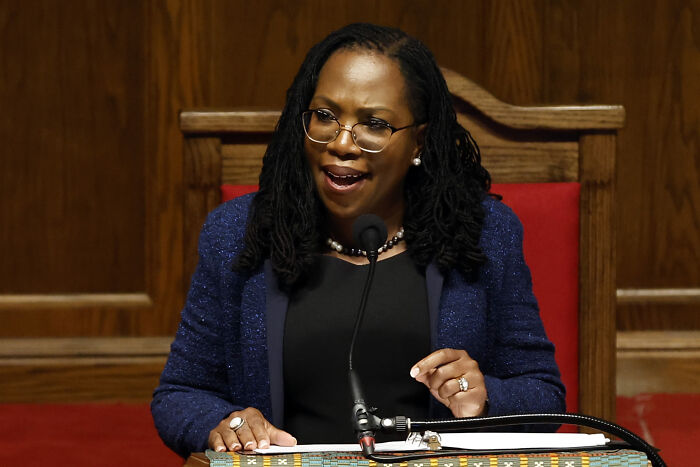
Image credits: Butch Dill – Pool/Getty Images
Ames had filed a lawsuit under Title VII alleging that her gay boss had discriminated against her for being straight by passing her up for a promotion, but the background circumstances rule meant she failed to prove her case.
The Supreme Court ruling means her original claim will now be re-evaluated in the lower court.
Following the decision, the federal agency responsible for enforcing workplace discrimination laws has said white men should feel able to come forward with allegations of bias.
In a social media post in December, Equal Employment Opportunity Commission (EEOC) Chair Andrea Lucas said white males may be able to claim cash.
The government is encouraging white men to come forward with bias allegations
Are you a white male who has experienced discrimination at work based on your race or sex?
You may have a claim to recover money under federal civil rights laws. Contact the @USEEOC as soon as possible.The EEOC is committed to identifying, attacking, and eliminating ALL race… pic.twitter.com/BYjbld5zdv
— EEOC Chair Andrea Lucas (@andrealucasEEOC) December 17, 2025
“Are you a white male who has experienced discrimination at work based on your race or sex?” Lucas asked in a video.
“You may have a claim to recover money under federal civil rights laws. Contact the EEOC as soon as possible.”
She added, “The EEOC is committed to identifying, attacking, and eliminating ALL race and sex discrimination—including against white male employees and applicants.”
The post came on the same day that Vice President JD Vance claimed that DEI policies were “a deliberate program of discrimination primarily against white men.”
Poll Question
Thanks! Check out the results:
Subscribe to Access
Exclusive Polls

By entering your email and clicking Subscribe, you're agreeing to let us send you customized marketing messages about us and our advertising partners. You are also agreeing to our Privacy Policy.
Thank you! You've successfully subscribed to newsletters!



15
0