

U.S. authorities faced sharp criticism after briefly removing a photograph of U.S. President Donald Trump from the newly released Jeffrey Epstein files, triggering accusations of a cover-up.
The U.S. Justice Department (DOJ) under Pam Bondi was required to release the full trove of Epstein-related documents by December 19, per the terms of legislation Congress passed last month.
- DOJ released 300,000 pages of Jeffrey Epstein files, but briefly removed a Trump photo, sparking cover-up accusations and public backlash.
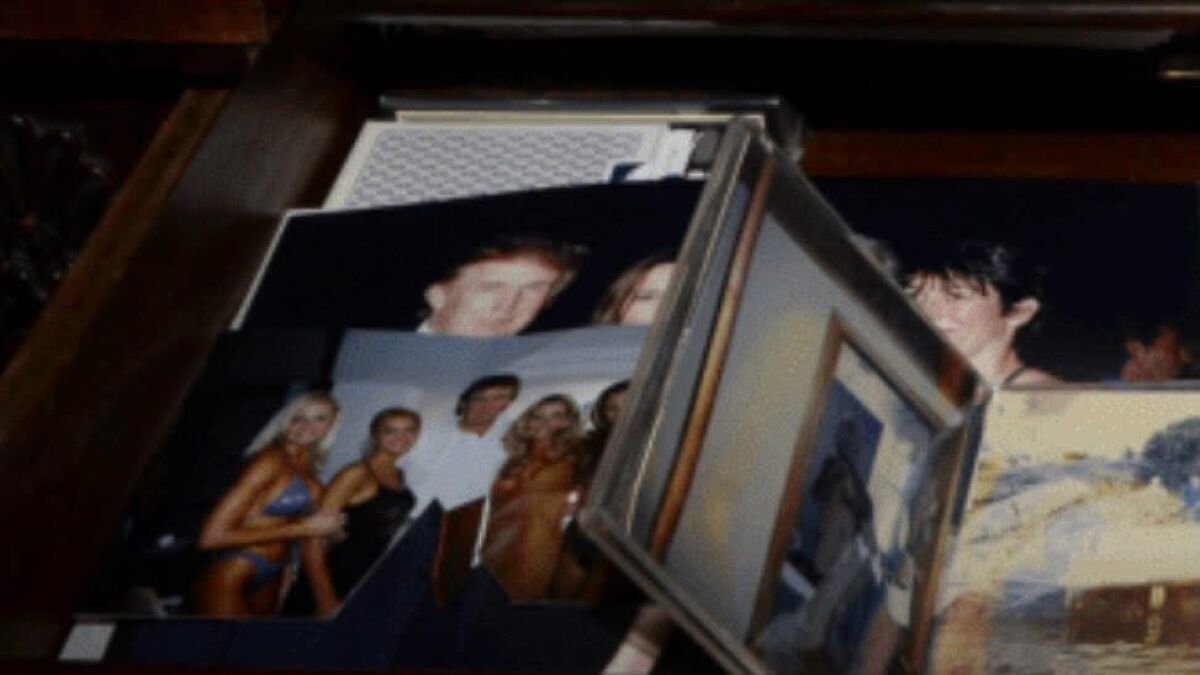
- A photo of Trump with four women in bikinis was taken from the files but later restored after no victims were identified in the image.
- Heavy redactions in the files, including obscured faces, drew criticism from survivors and lawmakers accusing DOJ of shielding the powerful.
On Friday, the DOJ published around 300,000 pages linked to the disgraced financier.
The DOJ briefly removed a photo of Trump from the Epstein files before quickly reversing course
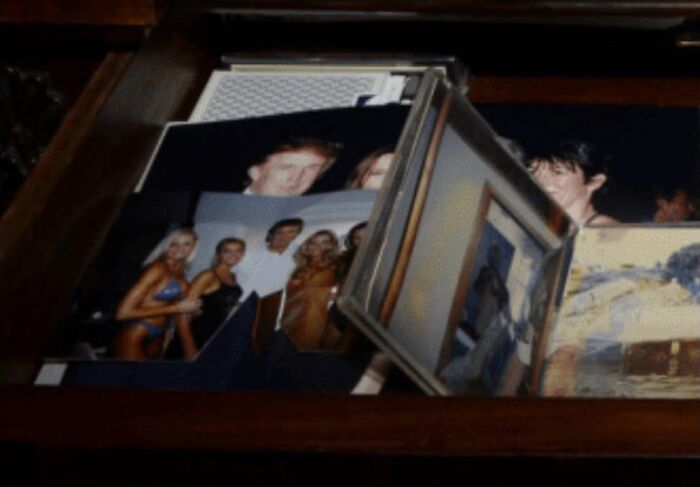
Image credits: Department of Justice
The files included hundreds of photos, some of which were allegedly taken by Epstein himself, and others by the FBI when agents raided the convicted sex offender’s properties.
One damning image showed an open desk drawer that contained two photos of Trump; in one image, he posed with four women in bikinis.
The other showed him alongside his wife, Melania Trump, Epstein, and Epstein’s longtime associate, Ghislaine Maxwell, at a social event around February 2000.
Within hours, officials quietly pulled more than a dozen files from public view, including the image of Trump with the women. Many of the released documents were already heavily redacted.
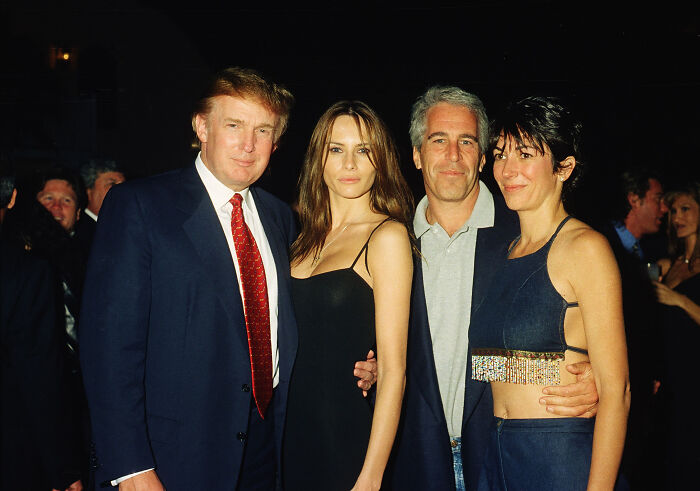
Image credits: Davidoff Studios/Getty Images
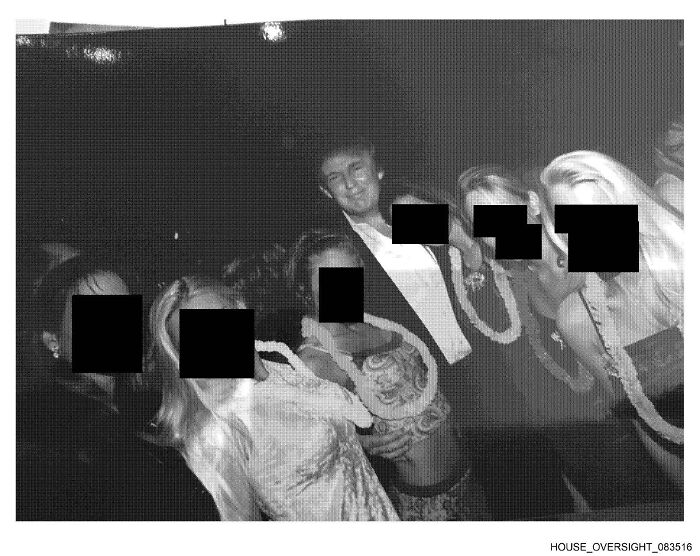
The release already consisted of nearly 700 blacked-out pages, and some that had the faces of women in photographs being obscured.
Late on Saturday, Deputy Attorney General Todd Blanche defended the removal, saying officials acted out of concern for the identities of the women pictured. He said the department had no evidence they were Epstein victims but removed the image “out of an abundance of caution” while officials reviewed it further.
Within hours, the Justice Department reversed course.
The Southern District of New York flagged an image of President Trump for potential further action to protect victims.
Out of an abundance of caution, the Department of Justice temporarily removed the image for further review. After the review, it was determined there is no…
— U.S. Department of Justice (@TheJusticeDept) December 21, 2025
Officials announced the photograph had been restored to the public archive without redactions, stating a review found no indication that any Epstein victims appeared in the image.
The DOJ said on social media, “The Southern District of New York flagged an image of President Trump for potential further action to protect victims. Out of an abundance of caution, the Department of Justice temporarily removed the image for further review.”
It continued, “After the review, it was determined there is no evidence that any Epstein victims are depicted in the photograph and it has been reposted without any alteration or redaction.”
Blanche added that the department took down the images after learning that there were concerns regarding the women.
Many accused the DOJ of overly redacting images to shield powerful people
“It has nothing to do with President Trump. If we believed the photograph contained a survivor, we would not have put it up … without redacting the faces,” Blanche said, adding that the DOJ was “still investigating” the photo and does not have “perfect information.”
“The photo will go back up, the only question is whether there will be redactions,” he said. “If there are survivors in any of the photos, we will redact them.”
In a 2015 email exchange between Epstein and Landon Thomas Jr., then a New YorkTimes reporter, Epstein had recounted a moment when Trump was so focused on young women swimming in his pool that he walked into a glass door.
In the email, one of many released by the House Oversight Committee last month, Epstein referred to a photo of “donald [Trump] and girls in bikinis in my kitchen.”
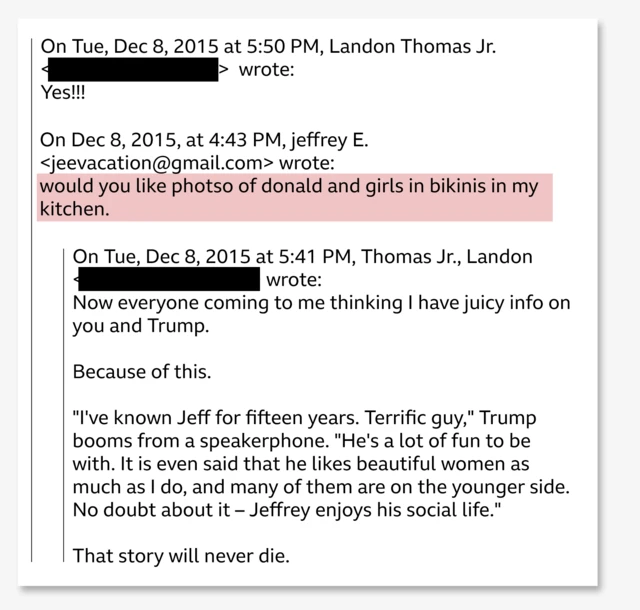
Image credits: House Oversight Committee
Epstein survivor Marina Lacerda condemned the sweeping redactions, calling them a “slap in our faces.”
Lacerda, who was abused from age 14 till 17, when she was deemed “too old” at 17, told Sky News, “We were just in shock … there is nothing there that is transparent.”
Democratic Senator Dick Durbin accused the administration of overusing redaction to shield “the rich and powerful,” while Republican Congressman Thomas Massie said the release failed to meet legal requirements.
Durbin, the top Democrat on the Senate Judiciary Committee, said he would investigate the matter. “The Trump administration is violating federal law to protect the rich and powerful,” he said.
One such image under scrutiny for being overly redacted was one of Michael Jackson, along with Bill Clinton, Diana Ross, and three blacked-out figures. While being a part of the Epstein files does not directly indicate guilt, the DOJ has long repeated that the redacted images protect Epstein’s victims.
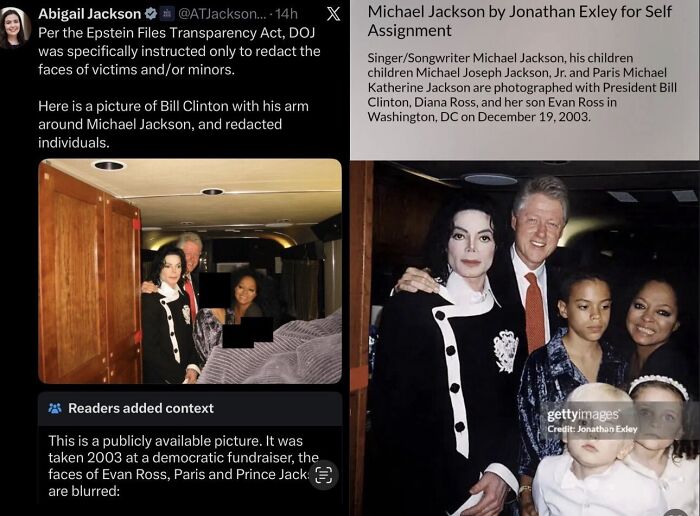
Image credits: AkhilJaxxn/X
In the case of this image, it was already publicly available, and the hidden individuals were Jackson’s own children, Michael Jr. and Paris, and Ross’ son, Evan.
The images angered many who said the redactions falsely implied a connection between the image and Epstein.
Separately, the files revealed unusual photographs from inside Epstein’s homes, including a framed front page of The Times from June 1994 featuring Princess Diana in her “revenge dress,” discovered hanging inside a wardrobe on Epstein’s private Caribbean island. The image added to criticism that the release lacked proper context.
Poll Question
Thanks! Check out the results:
Subscribe to Access
Exclusive Polls

By entering your email and clicking Subscribe, you're agreeing to let us send you customized marketing messages about us and our advertising partners. You are also agreeing to our Privacy Policy.
Thank you! You've successfully subscribed to newsletters!



16
0