

An Anti‑ICE Protest Sign Is Going Viral And Driving What May Be The Most Vital Debate Of Our Time
A protest sign has raced across social media, stunning netizens and kicking off a sprawling debate in comment sections: is it a joke, a threat, or a promise of accountability?
The photo has been reposted widely, with users sharing it as a punchline, a rallying cry, or an example of political rhetoric they see as dangerous.
Much of the chatter has been less about what happened at the protest itself and more about what the sign’s reference point is supposed to mean.
- A viral anti-ICE protest has sparked debate on accountability for alleged ICE abuses.
- The sign evokes post-World War II trials for war crimes and other crimes against humanity.
- Senior ICE official Gregory Bovino faced harsh criticism and was demoted after defending the killing of ICU nurse Alex Pretti in Minnesota.
- Bovino had come under the microscope for his image resembling that of a Nazi paramilitary commander.
- The viral sign highlights deeper fights over language, historical memory, and the future consequences of immigration enforcement actions.
A viral anti-ICE protest sign has sparked debate about the consequences of alleged abuses
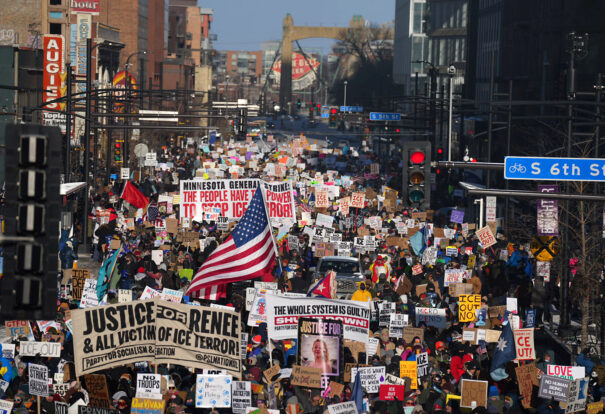
The circulating image forms part of widespread demonstrations against Immigration and Customs Enforcement (ICE), as outrage has mounted over the killing of ICU nurse Alex Pretti in Minnesota on Saturday at the hands of its agents.
The sign has gone viral at a moment when symbolism around immigration enforcement is already under a microscope.
In recent weeks, attention has focused on senior border-enforcement official Gregory Bovino, who had become the face of heavily criticized ICE operations in California and Minnesota.
He has since reportedly been stripped of his “commander at large” title, demoted back to his previous role, and shut out of his social media accounts in the wake of his vocal defense of the killing of Pretti.
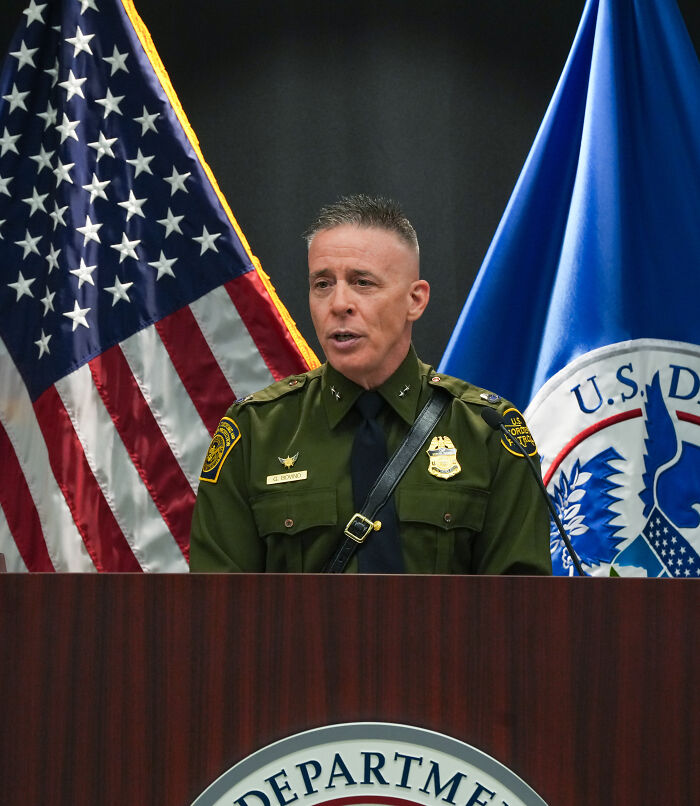
Before Bovino’s removal, European coverage had mocked the optics of his distinctive outerwear and haircut, with leading German newsweekly Der Spiegel labelling him, “The ICE commander in Nazi attire.”
German newspaper Süddeutsche Zeitung, meanwhile, said Bovino’s closely cropped haircut looked “as if he had taken a photo of [assassinated Nazi paramilitary leader] Ernst Röhm to the barber.”
The coverage of Bovino’s image has come within the context of a wider public debate around the aggressive tactics used during immigration enforcement operations, as well as the agency’s messaging, apparently drawing from extreme right-wing tropes.
🇺🇸 #US: Footage from earlier today shows anti-ICE protests in Minneapolis as thousands took to the streets amid a broader “ICE OUT!” general strike against federal immigration enforcement. pic.twitter.com/ZJ4Zj7SHsV
— POPULAR FRONT (@PopularFront_) January 24, 2026
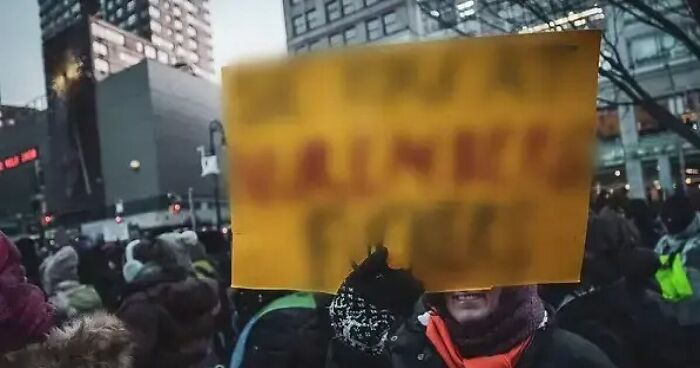
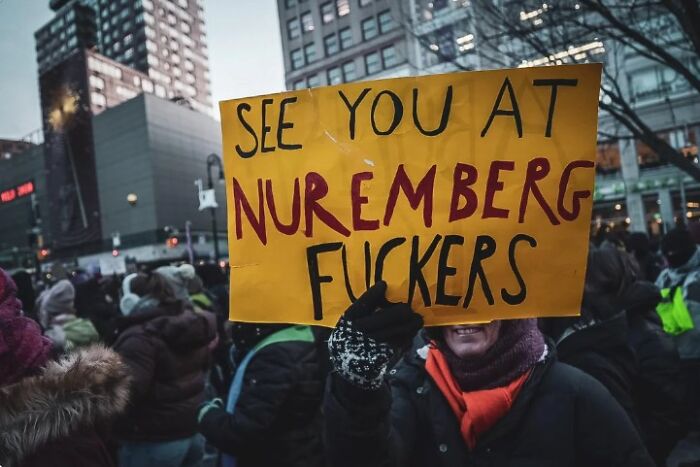
The sign itself is short, profane, and written as a direct address to its target.
It reads: “See you at Nuremberg f*****s.”
Appearing during an anti-ICE protest in New York on Saturday, the line invokes “Nuremberg” as shorthand for accountability for crimes committed by security services.
The Nuremberg Trials were the post-World War II prosecutions that helped define modern international criminal law. The best-known proceeding was the International Military Tribunal (IMT), which opened in November 1945 in Nuremberg, Germany, and issued judgments in October 1946.
The IMT focused on senior Nazi leaders and top officials of the German state and military. It also dealt with the regime’s security and repression machinery by declaring several elements criminal organizations—including the paramilitary group led by Röhm before he died in 1934.
The initial Nuremberg Trials resulted in 12 leading Nazis receiving death sentences
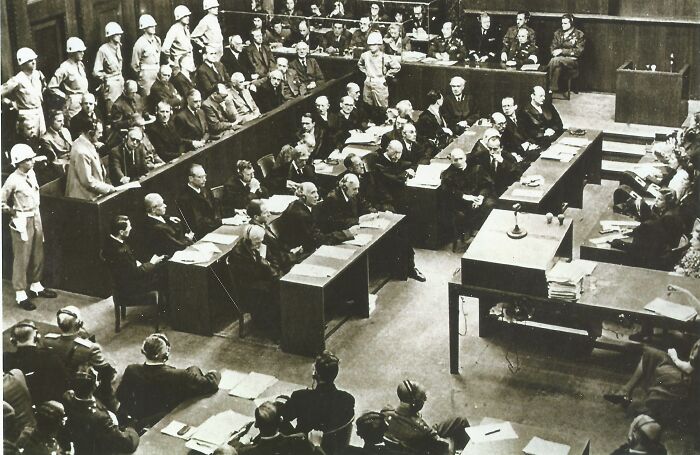
In total, the IMT tried 22 major defendants. Judges convicted 19 and acquitted three. Twelve received death sentences, three were sentenced to life imprisonment, and four were given prison terms ranging from 10 to 20 years.
Nuremberg, however, was not limited to that one headline trial. From 1946 to 1949, U.S. authorities held 12 additional “Subsequent Nuremberg Trials” that expanded the scope to other pillars of the regime, including judges, physicians, industrialists, and senior officials involved in persecution and mass killing.
That included U.S. prosecutors charging leaders of the mobile killing units responsible for mass shootings in Eastern Europe, pursuing convictions for war crimes and crimes against humanity.
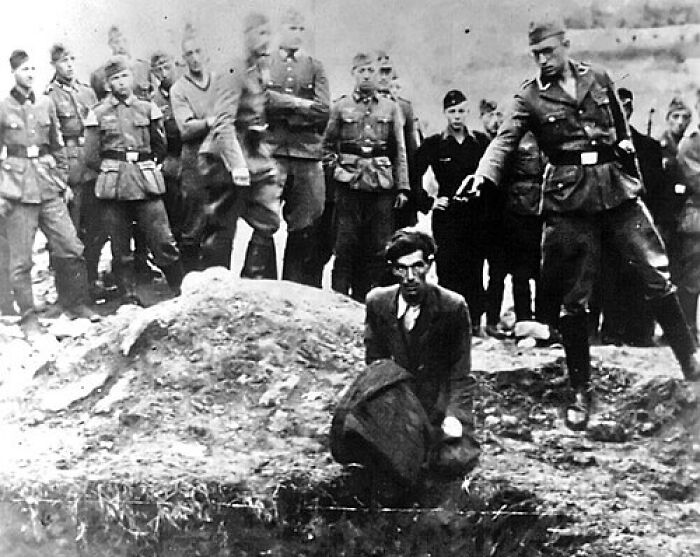
Online, supporters of the viral sign have treated it as shorthand for “eventual prosecution,” arguing that people involved in alleged abuses should expect future legal consequences.
Critics respond that it is a sloppy Nazi comparison that inflames tensions and risks trivializing the scale and specificity of Holocaust-era crimes.
Whatever the intent of the person holding it, the speed of the sign’s spread shows how debates over ICE and immigration enforcement increasingly play out as fights over language and historical memory.
Poll Question
Thanks! Check out the results:
Subscribe to Access
Exclusive Polls

By entering your email and clicking Subscribe, you're agreeing to let us send you customized marketing messages about us and our advertising partners. You are also agreeing to our Privacy Policy.
Thank you! You've successfully subscribed to newsletters!




17
1