

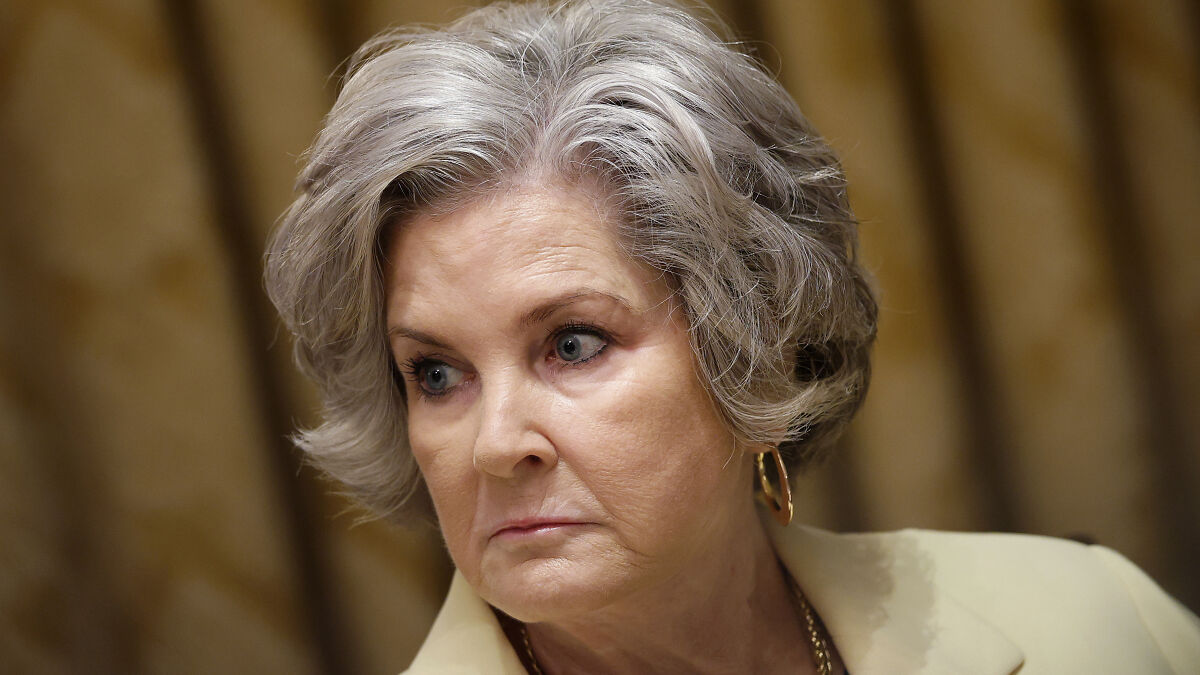
A new Vanity Fair exclusive presents a candid portrait of White House Chief of Staff Susie Wiles and her perspective on President Donald Trump.
Wiles weighed in on Trump’s governing style, the administration’s handling of flashpoint controversies, and the ways she says she has tried—sometimes unsuccessfully—to shape his decisions.
- Susie Wiles likened Trump’s governing style to an “alcoholic’s personality,” describing his belief that nothing is impossible for him.
- Wiles urged caution on pardons for January 6 defendants but later supported them as many had served sentences exceeding guidelines.
- She criticized Elon Musk’s attack on USAID and defended Robert F. Kennedy Jr. for pushing public health boundaries.
- Wiles addressed Trump’s hostile remarks toward female reporters, calling him a 'counterpuncher' in a society with strong women.
- After the Vanity Fair story, Wiles condemned it as a “disingenuously framed hit piece,” accusing the journalist of misrepresentation.
Two articles published on Tuesday, based on several conversations with Wiles and journalist Chris Whipple between January and November, span topics from foreign policy to pardons, political retribution, and controversies surrounding figures inside and outside the White House.
Susie Wiles discussed a wide range of issues and gave her perspective on Donald Trump
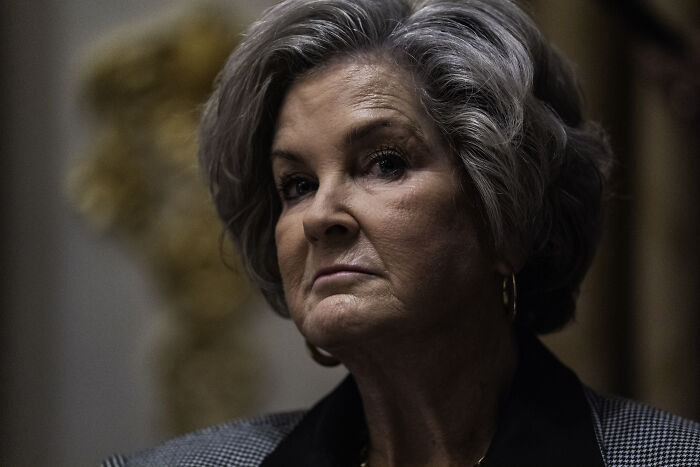
Image credits: Salwan Georges/The Washington Post via Getty Images
During one conversation on January 11, days before his inauguration, Wiles made remarks about Trump’s temperament as she discussed her experience growing up with a father who struggled with alcoholism.
Wiles’ father, sportscaster Pat Summerall, spoke publicly about his addiction and recovery. After entering treatment in the early 1990s, he remained sober for years before his death in 2013.
“Alcoholism does bad things to relationships, and so it was with my dad and me,” Wiles said.
“Some clinical psychologist that knows one million times more than I do will dispute what I’m going to say. But high-functioning alcoholics or alcoholics in general, their personalities are exaggerated when they drink. And so I’m a little bit of an expert in big personalities.”
Wiles then applied that lens to Trump, who does not drink, describing what she sees as his sense of limits—or lack thereof.
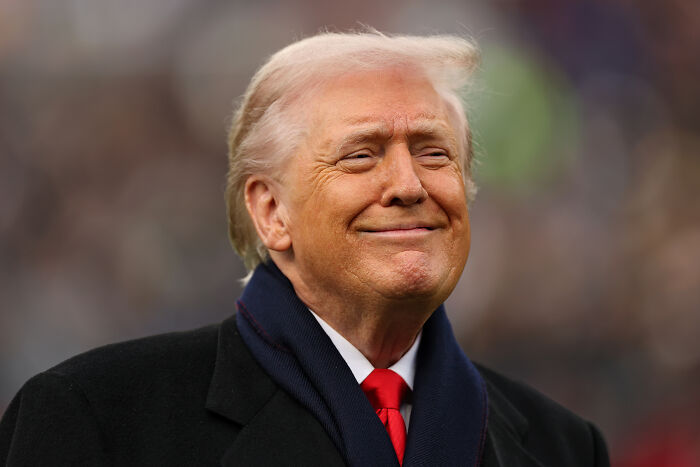
Image credits: Patrick Smith/Getty Images
She said Trump has “an alcoholic’s personality.” He “operates [with] a view that there’s nothing he can’t do. Nothing, zero, nothing.”
Wiles also revealed internal discussions over whether Trump should pardon people convicted in connection with the January 6, 2021, attack on the U.S. Capitol.
She described urging caution about pardons, drawing a distinction between nonviolent conduct and cases involving assaults on law enforcement.
“I said, ‘I am on board with the people that were happenstancers or didn’t do anything violent. And we certainly know what everybody did because the FBI has done such an incredible job.’”
She told Whipple she later reviewed cases Trump was considering and described a shift in her position.
Image credits: Anna Moneymaker/Getty Images
“In every case, of the ones he was looking at, in every case, they had already served more time than the sentencing guidelines would have suggested. So given that, I sort of got on board.”
Wiles also sharply criticized Elon Musk in the interview while discussing what she described as fallout from scrapping USAID—the U.S. Agency for International Development, a decades-old body that has long been a central arm of American foreign assistance and humanitarian response.
Speaking of Musk, she said, “He’s an avowed ketamine [user]. And he sleeps in a sleeping bag in the EOB [executive office building] in the daytime. And he’s an odd, odd duck, as I think geniuses are. You know, it’s not helpful, but he is his own person.”
Specifically recalling his evisceration of the agency, Wiles added, “I was initially aghast.”
“I think anybody that pays attention to government and has ever paid attention to USAID believed, as I did, that they do very good work.”
Wiles criticized Elon Musk and Pam Bondi
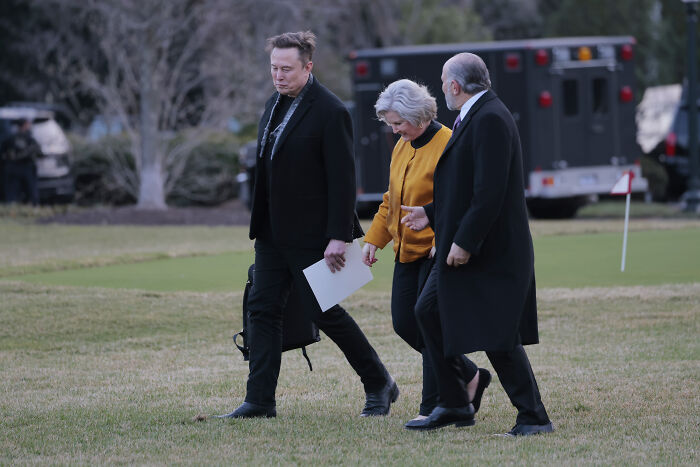
Image credits: Anna Moneymaker/Getty Images
Wiles also defended Health and Human Services Secretary Robert F. Kennedy Jr., whose positions on vaccines and public health have drawn sustained criticism from many medical experts and public officials.
“He pushes the envelope—some would say too far. But I say in order to get back to the middle, you have to push it too far.”
Wiles was also asked about blowback tied to the major White House construction plan for Trump’s new ballroom.
“Were you surprised by it?” Whipple asked her, referring to the criticism.
“No,” Wiles replied. “Oh, no. And I think you’ll have to judge it by its totality because you only know a little bit of what he’s planning.”
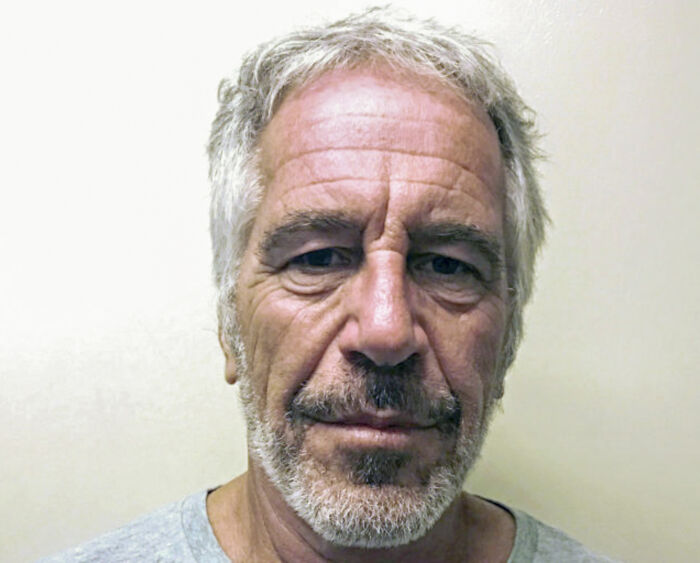
Image credits: Kypros/Getty Images
The interview spent significant time discussing the renewed turmoil surrounding the Epstein files.
It is an issue that has become a recurring political headache for Trump as document releases, news reporting, and online pressure campaigns have kept the story in circulation.
Wiles blamed Attorney General Pam Bondi for what she described as avoidable missteps in managing expectations, particularly among Trump’s base.
All files related to Epstein are now expected to be made public after the House and Senate passed a bill, and Trump signed off on it.
“I think she completely whiffed on appreciating that that was the very targeted group that cared about this,” Wiles said of Bondi. “First, she gave them binders full of nothingness. And then she said that the witness list, or the client list, was on her desk. There is no client list, and it sure as hell wasn’t on her desk.”
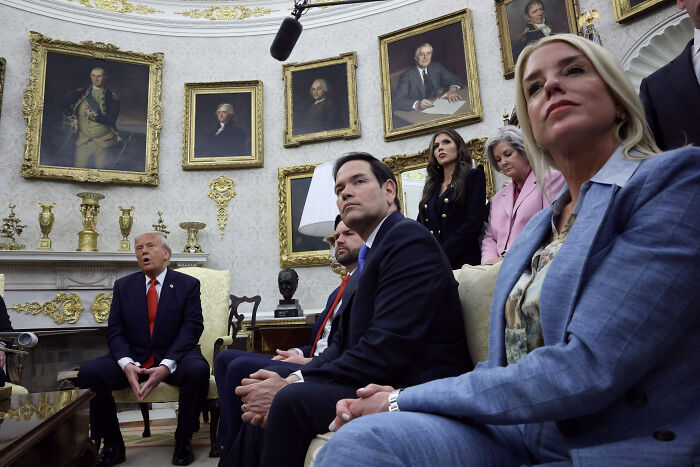
Image credits: Win McNamee/Getty Image
Asked about Trump’s alleged note to Epstein for his 50th birthday, Wiles replied, “That letter is not his.”
On foreign policy, Wiles described an unusually aggressive Venezuela posture that comes as the administration has publicly framed a continuing series of U.S. military strikes on vessels as an anti-drug trafficking campaign.
Those strikes began in early September and have continued in recent days, drawing intense scrutiny and sparking a bipartisan investigation into War Secretary Pete Hegseth.
Discussing those strikes with Whipple, Wiles appeared to contradict the administration’s official line that the strikes had nothing to do with Venezuelan president Nicolás Maduro.
“He wants to keep on blowing boats up until Maduro cries uncle. And people way smarter than me on that say that he will,” Wiles said.
Wiles appeared to contradict the justification for strikes on alleged drug boats
On Dec. 15, at the direction of @SecWar Pete Hegseth, Joint Task Force Southern Spear conducted lethal kinetic strikes on three vessels operated by Designated Terrorist Organizations in international waters. Intelligence confirmed that the vessels were transiting along known… pic.twitter.com/IQfCVvUpau
— U.S. Southern Command (@Southcom) December 16, 2025
“The president believes in harsh penalties for drug dealers, as he’s said many, many times… These are not fishing boats, as some would like to allege.”
She argued that the boats carried drugs, and eliminating them saves lives.
“The president says 25,000. I don’t know what the number is. But he views those as lives saved, not people killed.”
Whipple pointed out to the chief of staff, “Drug smuggling is not a death penalty offense, even if the president wishes it were.”
Her testy response, “No, it’s not. I’m not saying that it is. I’m saying that this is a war on drugs. [It’s] unlike another one that we’ve seen. But that’s what this is.”
Wiles also discussed Trump’s view of Russian President Vladimir Putin, referencing both past public moments and more recent calls as Trump tries to secure peace in Ukraine.
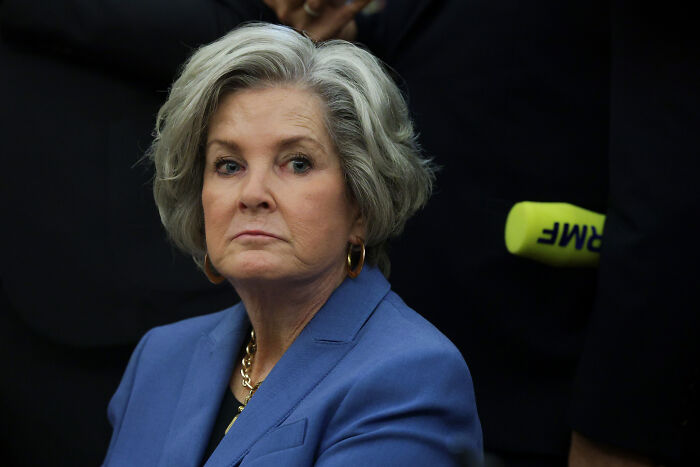
Image credits: Alex Wong/Getty Images
In February, when asked about Trump’s relationship with Putin, she recalled, “Watching it at a distance in Helsinki, I thought there was a real sort of friendship there, or at least an admiration.
“But on the phone calls that we’ve had with Putin, it’s been very mixed. Some of them have been friendly and some of them not.”
Whipple brought up the Russian president again in August, specifically citing claims that he is not looking to agree to peace in Ukraine.
“Donald Trump thinks he wants the whole country,” Wiles said.
The interview also addressed Trump’s repeated attacks on female reporters—part of a broader pattern that has triggered condemnation and generated a steady cycle of headlines.
The “Quiet, piggy” remark, aimed at a Bloomberg News reporter in November, drew a fresh wave of backlash, while other recent incidents included Trump insulting female journalists in public comments and on social media.
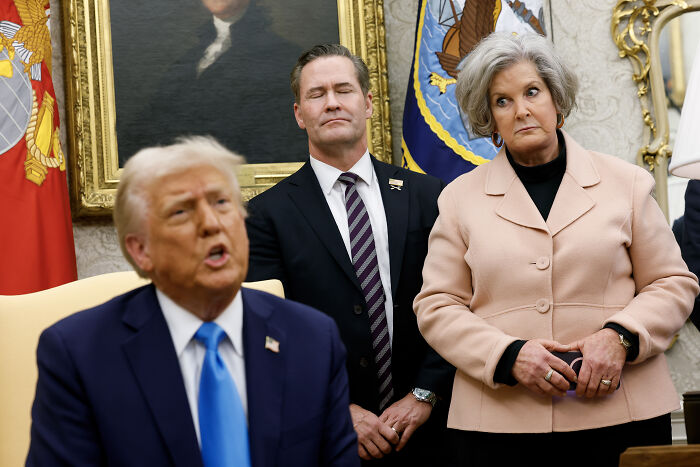
Image credits: Anna Moneymaker/Getty Images
On that issue, Wiles said, “He’s a counterpuncher. And increasingly, in our society, the punchers are women.”
On claims Trump plans to run for a third term—an idea the Constitution’s 22nd Amendment bars—Wiles told Whipple she has heard Trump acknowledge privately that he cannot do it, while also enjoying the political chaos the talk creates.
“Will the president run for a third term?” Whipple asked in November.
“No,” she said, and then added, “But he sure is having fun with it.”
Wiles said he knows it’s “driving people crazy” and agreed that is why he talks about it, adding Trump had told her in so many words that he would not run in 2028.
She continued, “Sometimes he laments, ‘You know, gosh, I feel like we’re doing really well. I wish I could run again.’ And then he immediately says, ‘Not really. I will have served two terms, and I will have gotten done what I need to get done, and it’s time to give somebody else a chance.’ So, you know, any given day, right? But he knows he can’t run again.”
The interview touch on perceived political retribution under Trump
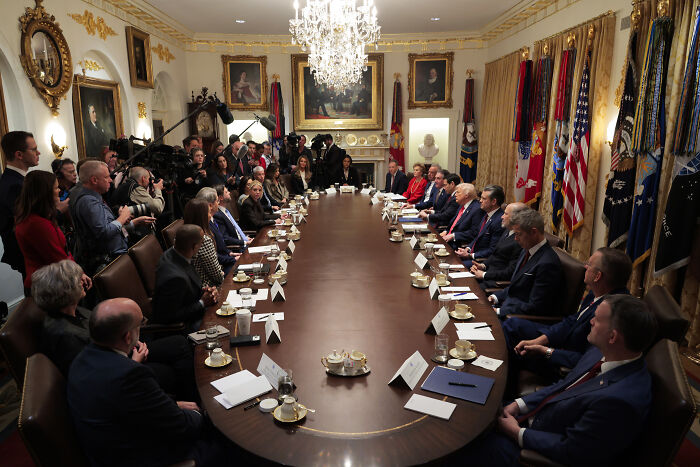
Image credits: Chip Somodevilla/Getty Images
Wiles described conversations about whether Trump’s second term has become, as critics argue, a campaign of political retribution—a question sharpened by Trump’s repeated public attacks on prosecutors and officials who investigated him.
Among the figures critics point to are James Comey, the former FBI director fired by Trump in 2017 after leading the bureau during the early Russia investigation, and Letitia James, New York’s attorney general who brought the civil fraud case against Trump and his business empire.
Comey was indicted earlier this year before the case was dismissed on procedural grounds, while efforts by Trump and his allies to pursue criminal charges against James have so far stalled.
Back in March, on the 56th day of Trump’s presidency, Whipple asked Wiles, “Do you ever go in to Trump and say, ‘Look, this is not supposed to be a retribution tour?’”
“Yes, I do,” she replied. “We have a loose agreement that the score-settling will end before the first 90 days are over.”
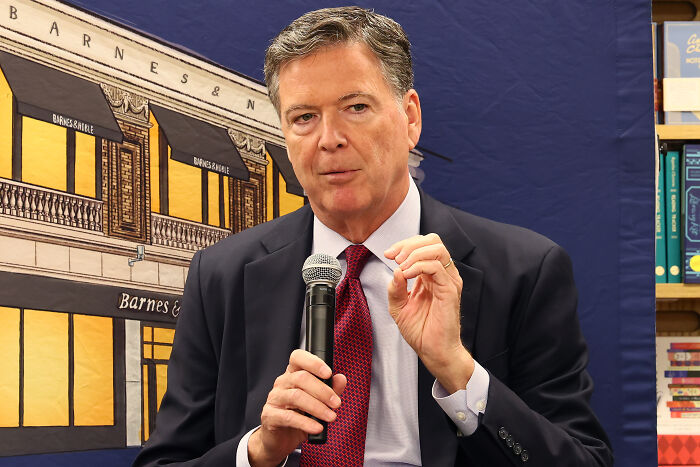
Image credits: Michael M. Santiago/Getty Images
In late August, amid a backdrop of several Trump opponents being targeted, Whipple asked Wiles, “Remember when you said to me months ago that Trump promised to end the revenge and retribution tour after 90 days?”
“I don’t think he’s on a retribution tour,” she said. “A governing principle for him is, ‘I don’t want what happened to me to happen to somebody else.’ And so people that have done bad things need to get out of the government.
“In some cases, it may look like retribution. And there may be an element of that from time to time. Who would blame him? Not me.”
She later added, “I don’t think he wakes up thinking about retribution. But when there’s an opportunity, he will go for it.”
Wiles has since described the article as a ‘hit piece’
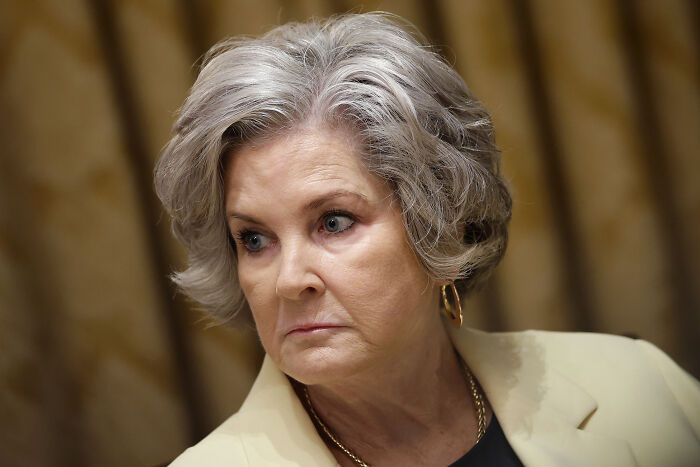
Image credits: Kevin Dietsch/Getty Images
Following the publication of the conversations, Wiles moved to defend certain controversial remarks that paint an unflattering picture of the administration.
In a post on X, Wiles described the Vanity Fair articles as a “disingenuously framed hit piece,” describing Trump and his cabinet as the finest in history.
She claimed significant context was disregarded and much of what she said about Trump and other figures was left out of the piece.
“I assume, after reading it, that this was done to paint an overwhelmingly chaotic and negative narrative about the President and our team,” Wiles wrote.
The article published early this morning is a disingenuously framed hit piece on me and the finest President, White House staff, and Cabinet in history.
Significant context was disregarded and much of what I, and others, said about the team and the President was left out of the…
— Susie Wiles (@SusieWiles) December 16, 2025
Trump has since suggested Wiles was “deceived” by Whipple and described her as “fantastic” to The New York Post.
“I didn’t read it, but I don’t read Vanity Fair—but she’s done a fantastic job,” Trump told The Post. “I think from what I hear, the facts were wrong, and it was a very misguided interviewer, purposely misguided.”
He added, “Yeah, deceived—and he didn’t have great access, a couple of very short interviews. And Susie generally doesn’t do interviews.”
Poll Question
Thanks! Check out the results:
Subscribe to Access
Exclusive Polls

By entering your email and clicking Subscribe, you're agreeing to let us send you customized marketing messages about us and our advertising partners. You are also agreeing to our Privacy Policy.
Thank you! You've successfully subscribed to newsletters!


Get down on your hands and knees and thank God that you have President Trump because without him your lives would be even more worthless and empty than they are now. You are NOTHING without him!!! Without hate you are nothing!!!
Get down on your hands and knees and thank God that you have President Trump because without him your lives would be even more worthless and empty than they are now. You are NOTHING without him!!! Without hate you are nothing!!!

15
1